ACTION 6: ASSEMBLY
6.1. HOW TO MAKE THE GENERAL ASSEMBLY OF SHAREHOLDERS' WORKS MORE ACCESSIBLE
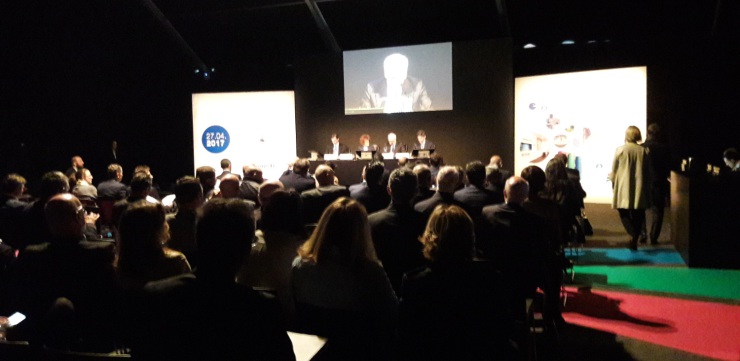
The general assembly of shareholders typically takes place once or twice a year. It is essential to deeply rethink its organization. In just two or three hours, decisions are made that impact both the coming year and subsequent periods. How can shareholders coordinate with each other when they are only allowed a maximum of 10 minutes per agenda item to speak from the podium? The syndicate committee is a body comprising about ten representatives of the mayors of municipalities with significant shares. It meets and coordinates with top management periodically (at least once a month) to discuss the company’s performance and verify corporate policies against the guidelines agreed upon in the public syndicate pact. Thus, individual shareholders who are part of the majority pact in Hera have the opportunity both to discuss among themselves and to interact with top management before the assembly. For the remaining 20,000 shareholders—accounting for approximately 99% of individuals and companies—there is no institutional mechanism for mutual coordination or for interaction with top management. This situation represents a de facto disparity. It is therefore deemed appropriate to identify institutional mechanisms that enable small shareholders to coordinate both among themselves and with top management, in the same way as is granted to the majority shareholder group.
6.2 HOW TO MAKE THE GENERAL ASSEMBLY OF SHAREHOLDERS' WORKS MORE ACCESSIBLE
The general assembly of shareholders typically takes place once or twice a year. It is essential to deeply rethink its organization. In just two or three hours, decisions are made that impact both the coming year and subsequent periods. How can shareholders coordinate with each other when they are only allowed a maximum of 10 minutes per agenda item to speak from the podium? The syndicate committee is a body comprising about ten representatives of the mayors of municipalities with significant shares. It meets and coordinates with top management periodically (at least once a month) to discuss the company’s performance and verify corporate policies against the guidelines agreed upon in the public syndicate pact. Thus, individual shareholders who are part of the majority pact in Hera have the opportunity both to discuss among themselves and to interact with top management before the assembly. For the remaining 20,000 shareholders—accounting for approximately 99% of individuals and companies—there is no institutional mechanism for mutual coordination or for interaction with top management. This situation represents a de facto disparity. It is therefore deemed appropriate to identify institutional mechanisms that enable small shareholders to coordinate both among themselves and with top management, in the same way as is granted to the majority shareholder group.
6.3 PROPOSAL FOR THE REORGANIZATION OF THE SHAREHOLDERS' MEETING
After reviewing the Californian model and verifying its exemplary functionality, which qualifies it as a best practice worth adopting, it is proposed to reorganize the shareholders’ meeting into multiple stages: 1. Informative phase; 2. Discussion and consultation phase among stakeholders; 3. Pre-deliberative phase for shareholders before the assembly; 4. Deliberative phase during the shareholders’ meeting.