Shareholders’ Meeting of April 30, 2024
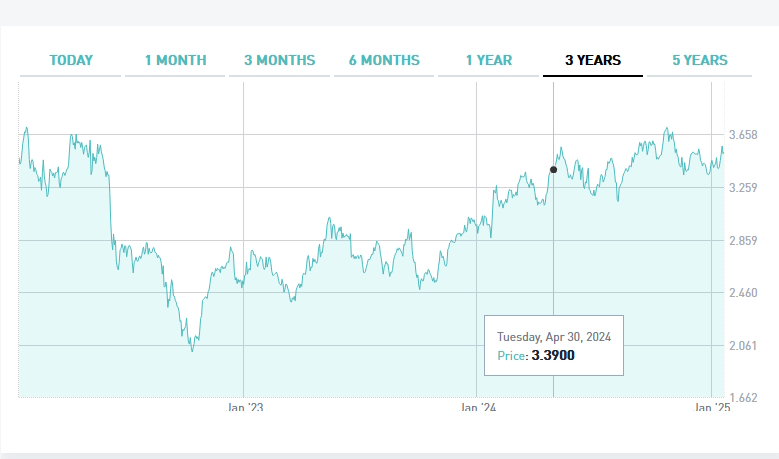 The ordinary and extraordinary Hera Shareholders’ Meeting, chaired by Executive Chairman Cristian Fabbri, met in Bologna to approve the 2023 financial statements and the distribution of a dividend rising to 14 cents per share, in line with what was already announced at the presentation of the 2027 Business Plan in light of the significant results achieved. The 2023 sustainability report was also presented to the Meeting. Approval of the 2023 financial statements with record results The Meeting approved the 2023 economic report, which highlighted the main economic and financial indicators in strong growth both compared to the previous year and compared to pre-crisis levels (2021 financial year). Continue reading on the Hera Group website
 In the space of a few years, the company has become a giant of national importance.
To evaluate a company with a turnover of over 15 billion euros, you need to know its various activities, its operations in the territory, the attitude of the management, and the directions and lines of the reference shareholders. It is not an easy task for professional analysts. Let alone for a small shareholder.
This year, Azionehera preferred to attend the proceedings of the Shareholders’ Meeting.
The spokesperson Enrico Nannetti listened to the reports of the Executive Chairman, the CEO
And he monitored the moods of the room, where about 100 shareholders were present, including Mayors of the Municipalities and representatives of private institutional investors, i.e. lawyers from law firms and financial consultancy firms.
.
The Hera Group is a solid and well-governed reality: Cristian Fabbri has full control of the company, which responds promptly thanks to a reactive and well-planned organization, made up of people who know each other, who have grown in the company and with the company.
The company is in productive and financial health:
– it manages the public utility networks of the most productive regions of the country.
– Revenues come from tariffs developed to return an average margin of 3% net.
– Management is cohesive and reliable because it has grown within the company over the years.
– The energy and data network businesses are rapidly expanding and continuously innovating.
– The structure could modularly acquire other businesses such as the geophysical reorganization of the territory.
Hera Spa is traveling in pairs: the organization responds promptly and intelligently.
The need to move from a network arrangement to their restructuring is approaching. The company has so far repaired the networks it manages, replacing parts or inserting polyethylene socks. This by passing the burden on to the tariff, i.e. attributing the cost to citizens. The same thing for the 30% inefficiency resulting from losses, which is the cost of electricity and basic chemicals to compensate for the same amount of drinkable water to be pumped into the network.
In the long run, the networks cannot continue to be “patched” for the following reasons:
– one part has different materials (polyethylene and fiber cement) that work at different pressures.
– the investments needed for replacement are enormous, and only a State can do that.
– further increasing bills could increase turnover but not revenue, creating a social crisis due to possible non-compliance, even partial, by users.
Public spending solves these problems in one fell swoop:
– Rebuilding the networks reduces maintenance costs.
– Rebuilding the networks reduces the waste of electrical energy and basic chemical energy of the potable water in circulation by 30%.
– Rebuilding the networks means providing liquidity and work to companies in the reference area, strengthening the spending capacity of families and therefore limiting the risk of defaults in paying bills.
The State is not a family where income must be greater than expenditure, or where the saying “there is no such thing as a free lunch” applies.
The State has roads with networks and sub-services to maintain, it has the school and health system, it has the police force and the pension system. These are all sectors that must be supported by public spending, that is, by issuing money.
The fact that issuing money creates inflation is a legend created by politicians and private bankers who tend to want to lend money to States at interest, which in order to pay the interest must sell shares of subsidiaries, state-owned assets and real estate.
The so-called developed countries are considered such because they print money out of thin air and make public spending, starting with the United States and China. While Europe is totally immobile, stuck to the austerity dictates of the bankers.
The world is traveling at a speed greater than that of the “European country system” in which it finds itself.
The BRIC block with China at the head by printing money out of thin air has become the factory of the world, generating colossal public spending on public and private services and infrastructures.
State-owned companies not only make public spending for the “public sector”, i.e. public utility networks and services, schools, universities, hospitals, public administration, law enforcement, armed forces, etc. But they also make public spending on a non-repayable basis for what is the “private sector” in our country.
The “private” does not exist in their country, it is in fact public, i.e. it is the State that owns the companies. Including energy companies and multi-utilities.
And by creating money out of nothing they build colossal factories, they rake in raw materials from around the world even at a premium, they pay the salaries of their employees, and the logistics and commercial network for export.
The reasons why a country that makes public spending by investing in state-owned companies has a structural competitive advantage are the following:
– by creating money ex nihil, they produce at zero cost.
– They create gigantic factories where the scale of production is designed for 1.4 billion users and consumers, with economies of scale unthinkable in the West. Look at this 22,500 MegaWatt hydroelectric plant, financed with a computer click of 2 trillion dollars.
– They have an industrial policy aimed at the real economy with factory cities. Look at this city factory with 17 thousand employees.
– in less than a generation they have created supermodern megalopolises that function perfectly from the point of view of public utilities. Look at these videos 1 and video 2 with five megalopolises with 20 to 30 million inhabitants and seventeen with over 10 million inhabitants.
– They have a country system in which the State, being simply the sole owner of the companies, shares internally the know-how between Chinese companies, as happened in the automotive industry. And the know-how was perhaps acquired in the past by hosting foreign groups, from which they learned the manufacturing processes, improving them over time.
– Since the companies are all state-owned, they cooperate in research and development and procurement. In short, the State provides unlimited “men, means and materials”.
To compete with Chinese and American companies that print money ex nihil, with gigantic factories, there are two alternatives:
A. either we isolate ourselves and do not compete by raising customs barriers… living outside the real world.
B. Or if we decide to compete, we do it on equal terms. That is, by creating a new industrial policy architecture, financed by public spending, which means “printing money” for structural investments, until full employment is achieved, and inflation at 10% (today real inflation is even higher).
In the second case, we need to create companies of a size that is competitive with Chinese ones.
To do this, each European country must recreate its own National Champions.
A. Creation of a national country system
Coordinate between subsidiaries to create an Italian Consortium on the IRI model, which must have its own banking system. This can be done by starting from the union of Mediocredito Centrale with the recovery of the golden share of Monte dei Paschi di Siena.
The Consortium Italy/IRI must unify the functions of:
– procurement;
– fleet of vehicles and material warehouse;
– research and development;
– information systems.
B. Creation of an international country system
Each European country must have its own National Consortium, and the various National Consortia come together in the Consortium Europe. The various National Consortia and the Consortium Europe must receive quantitative easing from the ECB, i.e. money ex nihil to finance their activities, starting with the restructuring of networks, and the safety of the territory. The Consortium Europe must unify the functions of:
– procurement;
– fleet of vehicles and material warehouse;
– research and development;
– information systems.
C. Global competition
The Consortium Europa can thus compete at a national and international level, avoiding being the object of mergers and acquisitions by foreign companies, especially Chinese and American ones… which have the secret and invincible weapon given by the fact that here in Europe no one knows that they create money from nothing with the click of a computer.
Potrebbe interessarti anche
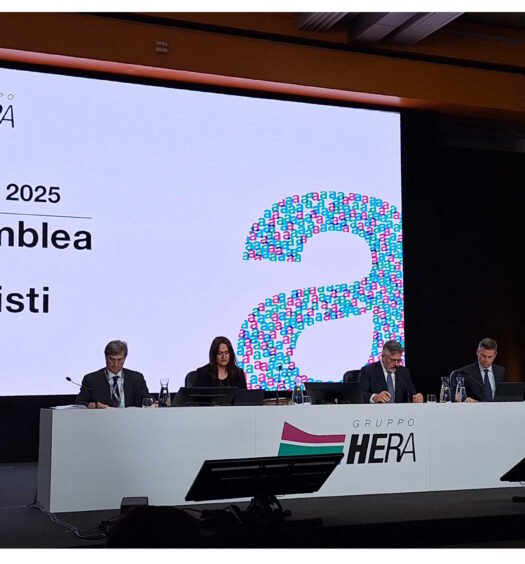
APRIL 30, 2025
Speech by Shareholder Enrico Nannetti
Good morning Ladies and Gentlemen,
I speak …
Read More